CleanZone Field Brief
What Skyglow Does to Sleep
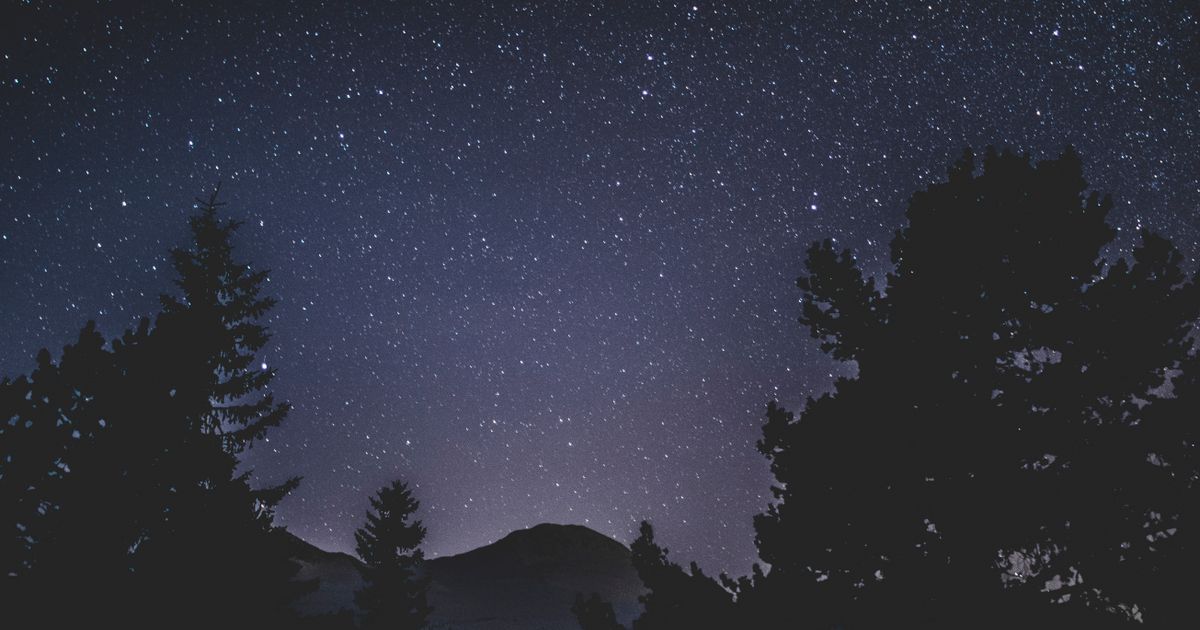
The human eye can see stars down to magnitude 6.5 under truly dark skies. In a typical European or North American suburb, the naked-eye limit is closer to magnitude 4. That difference is not romantic nostalgia; it is a proxy for how much artificial light is altering your sleep, your melatonin, and your circadian rhythm.
At a glance
- Night brightness is measured two ways: from orbit (NASA/NOAA's VIIRS Day/Night Band, ~750 m resolution, radiance in nW/cm²/sr) and from the ground, via the nine-step Bortle dark-sky scale.
- The retina's melanopsin-containing ganglion cells peak in sensitivity near 480 nm; blue-rich light (~460–480 nm) is both the most efficient at scattering into skyglow and the most efficient at suppressing melatonin.
- Gooley et al. (J Clin Endocrinol Metab, 2011) found ordinary room light (~200 lux) before bed suppressed melatonin onset in 99% of subjects and shortened its nightly duration by roughly 90 minutes.
- Skyglow travels well past the settlement that produces it — Falchi et al. (Science Advances, 2016) estimate that ~83% of the world's population, and over 99% of people in the US and EU, live under light-polluted skies.
- IARC, the WHO's cancer research arm, classifies circadian-disrupting shift work as a Group 2A probable carcinogen; night-shift populations also show measurably higher rates of metabolic syndrome.
The standard data source for artificial sky brightness is the VIIRS Day/Night Band, carried on the Suomi NPP and NOAA-20 satellites, which resolves radiance at roughly 750-metre ground resolution. The measurements are calibrated in nW/cm²/sr, normalised to a reference zenith angle. Globe at Night, the long-running citizen-science programme, complements this with naked-eye limiting-magnitude estimates from volunteers worldwide; ground-truth that satellite radiance alone cannot capture, because a camera in orbit cannot tell you whether a hedge, a hill, or a set of blackout curtains stands between a given bedroom window and the nearest lamp.
What the satellites actually see
Radiance vs. skyglow: two different things
VIIRS measures upward-directed light at the top of the atmosphere. Skyglow is the diffuse light scattered back toward the ground by aerosols and molecules, and it does not stay where it was made. A city with efficient full-cutoff streetlights and low aerosol loading may register high upward radiance but produce modest skyglow at ground level, since most of the wasteful uplight is trapped aloft. A snow-covered town with older sodium lamps and humid air can produce severe skyglow despite moderate radiance, because snow and humidity both multiply rescattering. Falchi et al.'s 2016 world atlas of artificial night-sky brightness found light domes from mid-sized cities routinely detectable a hundred kilometres or more from their source on a clear night; why a postcode 40 km from a metro area can register a brighter sky than its own streetlight inventory would predict.
Skyglow behaves like a regional pollutant. Two houses with near-identical streetlight counts nearby can sit under very different skies purely because of what a distant city is doing to the atmosphere above them; the same reason a factory's plume can dim a valley miles from the stack.
Colour temperature: why LEDs changed the game
The shift from high-pressure sodium (~2000 K, near-monochromatic orange) to white LED (4000–6000 K, broad-spectrum) street lighting has two consequences. First, the bluer spectral peak scatters more efficiently off atmospheric molecules (Rayleigh scattering favours shorter wavelengths) increasing skyglow per unit of radiance emitted. Second, the circadian system is most sensitive to exactly that part of the spectrum: ipRGCs carrying the photopigment melanopsin peak in sensitivity around 480 nm, with the practical melatonin-suppressing band spanning roughly 460–480 nm. The same photopic lux reading is measurably more disruptive coming from a 5000 K LED than a ~2000 K sodium lamp. The International Dark-Sky Association recommends 2200–2700 K sources for ecologically and residentially sensitive areas, but adoption is patchy, and tracking it needs local fixture data; satellites cannot see colour temperature.
The Bortle scale: what your own eyes already report
Long before satellites, astronomers needed a way to describe "how dark is dark." John Bortle published his nine-level scale in Sky & Telescope in 2001, and it remains the standard shorthand among stargazers, and, increasingly, among people trying to describe a genuinely dark bedroom to someone who has never seen one. It runs from Class 1, a pristine site where the Milky Way casts a faint shadow and the naked-eye limiting magnitude exceeds 7.6, down to Class 9, an inner-city sky where only the Moon, planets, and a handful of the brightest stars cut through the glow.
A city dweller and a rural stargazer are not disagreeing about taste when they describe "how dark it gets", they are reading off different points on the same nine-step scale, whether or not they know the scale's name.
The Bortle number is a useful gut-check precisely because it is a self-report anyone can make: step outside forty-five minutes after sunset, let your eyes adapt, and count what you can see. But it describes the whole sky dome, and sleep happens at one window; which is why it pairs with, rather than replaces, satellite radiance and a streetlight inventory.
From radiance to health: the circadian pathway
IARC, the World Health Organization's cancer research arm, classifies shift work that involves circadian disruption as a Group 2A probable carcinogen, a 2007 evaluation reaffirmed in 2019. For the general, non-shift-working population the evidence is not causal in the same sense, but the mechanism is the same pathway running at lower intensity, every night, for decades. The ipRGCs described above project directly to the suprachiasmatic nucleus, the brain's master clock, and from there to the pineal gland, which produces melatonin only when that pathway is not being told "it's still light out."
Gooley et al. (Journal of Clinical Endocrinology & Metabolism, 2011) put this to a controlled test: participants exposed to ordinary room light (about 200 lux) in the hours before bed showed suppressed melatonin onset in 99 percent of cases, and their total nightly melatonin secretion window was roughly 90 minutes shorter than under a dim-light control below 3 lux. A separate study on self-luminous tablets (Wood et al., Applied Ergonomics, 2013) found that two hours of tablet use at maximum brightness before bed suppressed melatonin by about 22 percent relative to a control condition; one hour alone produced a smaller, non-significant dip. Outdoor light sources are harder to switch off than a tablet, a streetlamp outside an uncurtained window delivers its dose for as many hours as it stays lit.
Lux is not an intuitive unit. Full moonlight is roughly 0.25 lux; an unlit rural bedroom is under 1 lux; ordinary indoor room light is around 200 lux; overcast daylight through a window is around 1,000 lux. The melatonin-relevant thresholds above sit at the low end of that range — well below what feels "bright" to a light-adapted eye.
Beyond sleep: the metabolic link
Sleep loss is the most immediate consequence of nightly light exposure, but circadian disruption reaches further. Recent meta-analyses of night-shift cohorts report a significantly higher rate of metabolic syndrome among night-shift workers (odds ratio around 1.17) and a roughly 3.6 percent higher rate of obesity/overweight, alongside links to type 2 diabetes and cardiovascular disease. Nobody is proposing a streetlight through a curtain carries shift-work-scale risk, the doses aren't comparable. What the shift-work literature demonstrates is the pathway: suppress and delay melatonin often enough, and the downstream hormonal machinery drifts out of sync with the light-dark cycle it evolved to track.
Streetlight density as a household metric
While VIIRS gives the regional radiance envelope and the Bortle number gives a whole-sky verdict, the light that actually enters a bedroom depends on local streetlight density. OpenStreetMap includes streetlight points in some regions, and national mapping agencies in the Netherlands, the UK, and Germany publish public lamp inventories. Where that data is absent, population density is a workable proxy: lamp posts per kilometre of road track local population density closely.
The practical question is not "is this cell bright?" but "is this specific window in line-of-sight with a lamp?" A house set back 30 metres behind trees loses most direct glare even in a high-radiance cell, while a corner house with a bright LED luminaire outside the master bedroom may be worse off than the satellite average suggests, and worse off than its own Bortle rating implies, since one eye-level fixture fifteen metres away outweighs a dark sky overhead.
A good regional Bortle number is not a guarantee. It describes the whole sky dome, averaged across your field of view, it says nothing about the one unshielded fixture forty feet from your pillow. Check the specific window as well as the postcode.
Reading the numbers
We score a cell on three light-pollution metrics:
| Measure | Reference point | Reading it |
|---|---|---|
| Light pollution (VIIRS radiance) | nW/cm²/sr from VIIRS DNB annual composite | < 0.25 → dark-sky quality; 0.25–1.0 → rural transition; 1.0–5.0 → suburban; > 20 → dense urban core |
| Population density | Eurostat / US Census Bureau persons per km² | > 1,500/km² → streetlight infrastructure likely dense; > 5,000/km² → almost certainly direct-glaze risk unless building is set back |
| Streetlight density | OpenStreetMap lamp points or national inventory where available; proxy = lampposts per km road | > 40 points/km road → high probability of line-of-sight exposure to a bedroom or living-room window |
What to do about it
Relocation is the only complete fix, but partial fixes are available. Blackout curtains work for direct glare but not for diffuse skyglow, which enters through every aperture and reflects off interior surfaces. External shutters are more effective but expensive. For renters, the simplest intervention is a sleep mask rated to block light at 0.1 percent transmittance or lower. It does not reduce skyglow, but it does remove the retinal trigger.
If you are house-hunting, test the bedroom at the viewing time that matters, which is after sunset. Look out the window and count lit luminaires visible from the pillow position. More than two in direct line of sight, or one very bright LED within 15 metres, is a meaningful circadian load.
Two ways to check before you sign anything
| Satellite radiance alone | Ground truth, added in |
|---|---|
| VIIRS DNB is annually composited and smoothed. It won't show a housing development whose streetlights went up last month, or a tree removal that newly exposed a bedroom window. It gives the regional envelope. The night you will actually experience is finer than that. | Globe at Night submissions and a same-night Bortle self-check are coarser spatially but temporally current. A cluster of recent reports below magnitude 4.0 near a target address confirms local conditions match (or diverge from) the satellite picture. |
If volunteer reports show magnitude 5.0 or better in a cell VIIRS colours as suburban, look for a topographic or vegetative shield — a hill, a forest belt, or deliberate design — that may be protecting that pocket.
- Check VIIRS DNB radiance for the target 25 km cell
- Cross-reference with Globe at Night limiting-magnitude reports from the same region
- Pull OpenStreetMap or national inventory for streetlight point density
- Use population density as a proxy where lamp data is missing
- Inspect the target bedroom after dark for line-of-sight to lit luminaires
- Match radiance + streetlight density to building setback and window orientation
The metrics above: light_radiance, pop, and streetlight density; are displayed per cell on the CleanZone map. We do not predict your individual melatonin suppression. We show you what the satellites and the ground volunteers report, and let you decide whether your windows are shielded enough to matter.